1941 to 1945

The Wartime
Paradox

World War II brought extreme and contradictory changes for Asian Americans. While some communities gained new respect as wartime allies, national panic led to the massive, unjust confinement of over 120,000 Japanese Americans on home soil.

Wartime Perceptions

Allying with Communities

Following the attack on Pearl Harbor, Chinese and Filipino Americans found themselves welcomed as vital allies. They served proudly in integrated military units, gained access to skilled defense jobs, and saw long-standing cultural barriers begin to ease.

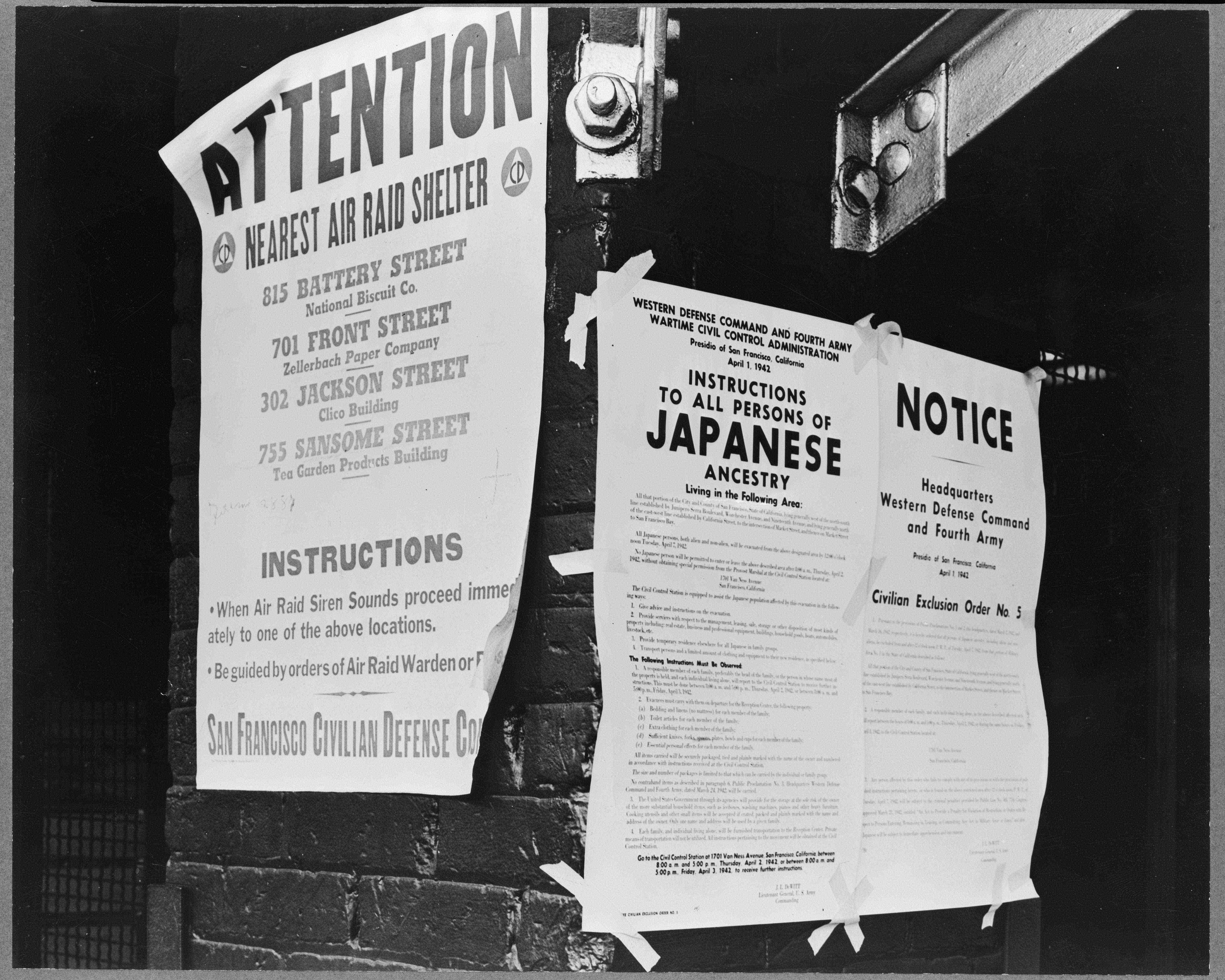
Dorothea Lange photograph of the Civilian Exclusion Order Poster

February 19, 1942

The Presidential Order

In response to wartime fear, President Franklin D. Roosevelt signed Executive Order 9066. This directive authorized the military to designate exclusion zones along the West Coast and remove any residents deemed a threat.

Though the order never explicitly named Japanese Americans, it was applied exclusively to them, targeting citizens and immigrants alike.

Leaving Everything Behind
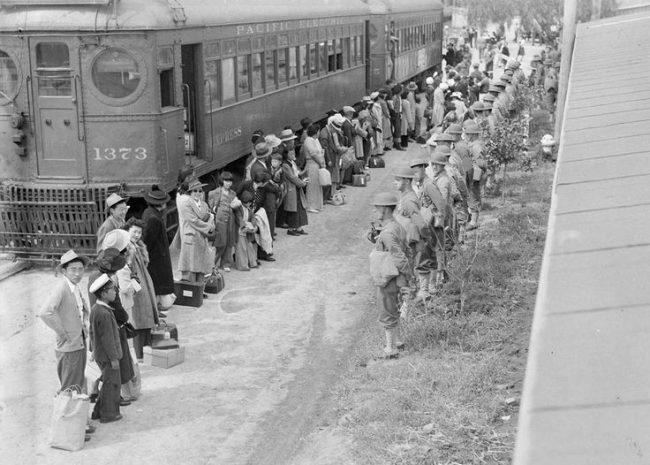
Japanese Americans arriving at the Santa Anita Assembly Center

Families were given just days to sell their properties, close businesses, and pack up their lives. They were forced to leave behind farms, homes, and pets, allowed to carry only what would fit into their hands. Two-thirds of those relocated were native-born U.S. citizens.

They were assigned identification numbers, tagged like baggage, and sent to assembly centers.

Wartime relocation camp landscape with barracks

The Relocation Centers

Barbed Wire & Desert Winds

Families were moved to ten remote camps situated in harsh, dusty deserts. Living in poorly insulated barracks, they shared public mess halls, drafty latrines, and stood under the constant gaze of military guard towers.

Despite these oppressive conditions, communities organized schools, published newspapers, and planted gardens to preserve their dignity.

The Loyalty Dilemma

In 1943, the government issued a questionnaire to all adult internees. How will you respond to the infamous Question 28, which demands you swear unqualified allegiance to the U.S. while your family remains behind barbed wire?

The 442nd Infantry Regiment

Many young Japanese American men answered "Yes-Yes" and volunteered to serve in the military. They formed the **442nd Regimental Combat Team**, an all-Japanese American unit.

While their families remained incarcerated behind barbed wire, the 442nd fought with legendary courage in Europe, becoming the most highly decorated unit in U.S. military history for its size and length of service.

Testing the Constitution

A young man named **Fred Korematsu** refused to comply with the military evacuation order, choosing to stay in California. He was arrested and took his case all the way to the Supreme Court, arguing that Executive Order 9066 violated his constitutional rights.

In 1944, the Supreme Court ruled against him in a 6-3 decision, declaring that the civil rights of a citizens group could be suspended during times of military necessity.

The Path to Healing

In 1988, President Ronald Reagan signed the Civil Liberties Act, formally apologizing for the internment and offering financial reparations to survivors. Unscramble the word used to describe this legal action of making amends or offering compensation:

S
E
R
D
E
R
S

Guarding Liberties

You have completed Chapter 7: World War II & Internment. This painful chapter showed how fragile civil rights can become during times of national crisis. It remains a powerful reminder of the vital importance of protecting constitutional rights for all citizens.

Lesson Completed